Elective Single Embryo Transfer Advantages: Maximising IVF Success with AI in Kerala
Updated: Aug 21
For generations across India, the phrase "the more, the merrier" has subtly governed expectations surrounding fertility care. When couples face the emotional weight of difficulty conceiving, a common assumption emerges: transferring two or three embryos during In Vitro Fertilization (IVF) must double or triple the chances of having a baby. Many patients secretly hope for twins or triplets, viewing multiple embryos as a shortcut to completing their family or a guarantee against campaign failure.
However, modern reproductive medicine paints a radically different picture. In advanced reproductive endocrinology, transferring multiple embryos is no longer considered a badge of efficiency. Instead, it is increasingly recognised as a major risk factor for maternal and neonatal complications, including premature labor, low birth weight, pre-eclampsia, and long-term developmental challenges.
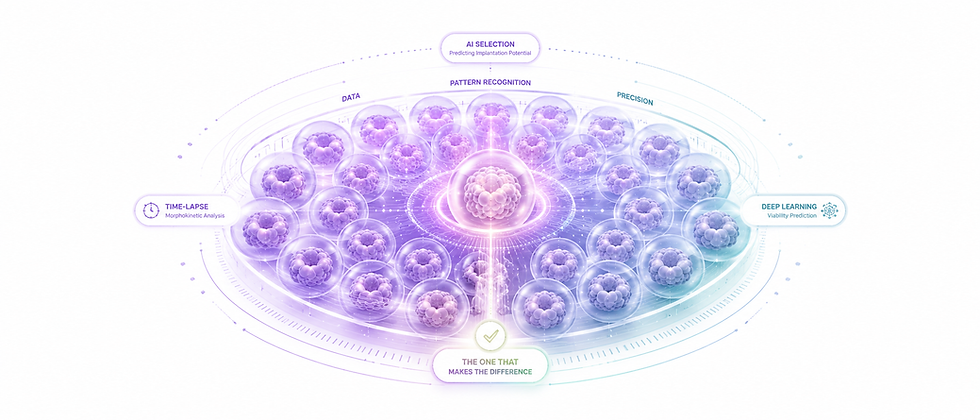
Today, world-class fertility care has embraced the Elective Single Embryo Transfer (eSET) standard. Powered by 2026/2027 deep learning predictive modeling and non-invasive time-lapse morphokinetics, embryologists can now analyse millions of cellular data points to identify the single, most viable embryo in a cohort. This technological leap ensures that patients achieve elite clinical pregnancy rates without exposing mothers or newborns to the medical hazards of multiple gestations.
Whether you are exploring options at the Best IVF Clinic in Kerala or evaluating advanced reproductive technologies, understanding the shift from traditional practice to precision AI-guided embryo selection is vital for your journey toward a healthy family.
1. Deconstructing the Myth: Single vs Multiple Embryo Transfer IVF
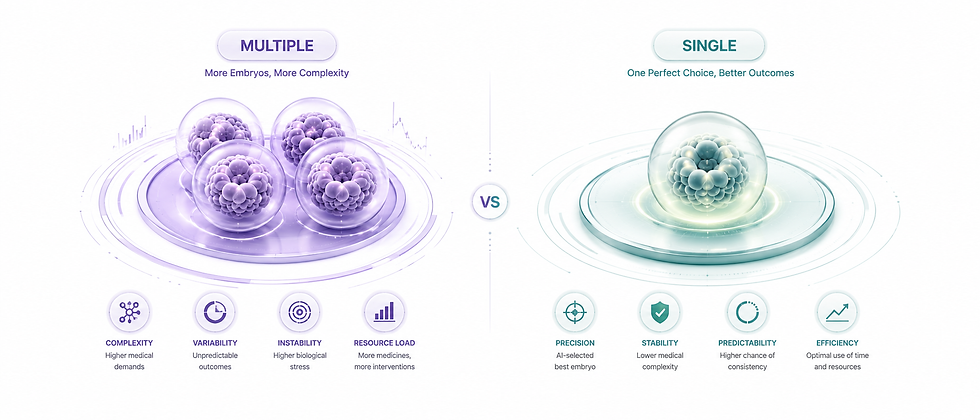
To understand why leading fertility specialists advocate for eSET, one must first dismantle the deep-seated cultural myths that persist across and surround South Asia.
The Cultural Misconception in India
In many Indian households, IVF is viewed through a lens of high stakes, significant financial sacrifice, and emotional urgency. When couples invest in assisted reproduction, there is an understandable desire to maximise every single cycle. Relatives, well-meaning friends, and outdated online forums often propagate the idea that transferring multiple embryos increases the likelihood of success. Some believe that if one embryo fails to implant, another will "take over," or that carrying twins provides an instant "two-in-one" solution to infertility.
In reality, the human uterus is designed primarily to carry one child at a time. When evaluating single vs multiple embryo transfer IVF, historical medical data reveals that transferring two or three embryos does not significantly increase the cumulative live birth rate compared to sequential single embryo transfers. What it does dramatically increase is the rate of twin and triplet pregnancies, along with their associated medical complications.
Medical Risks of Multiple Gestations
Multiple pregnancies are medically categorised as high-risk gestations. The physical stress placed on a mother carrying twins or triplets includes:
Pre-eclampsia and Gestational Hypertension: A significantly higher incidence of severe blood pressure spikes that threaten maternal kidney and liver function.
Gestational Diabetes Mellitus: Increased hormonal flux causing glucose intolerance, requiring strict dietary management or insulin therapy.
Preterm Delivery and Low Birth Weight: More than 50% of twin pregnancies lead to premature delivery before 37 weeks, often requiring prolonged stays in a Neonatal Intensive Care Unit (NICU).
Placental Complications: Elevated rates of placenta previa, placental abruption, and postpartum hemorrhage.
By shifting to elective single embryo transfer, clinics preserve maternal wellbeing while delivering identical cumulative success rates over time.
2. Key Elective Single Embryo Transfer Advantages
Understanding the specific elective single embryo transfer advantages empowers patients to make informed decisions rather than emotional guesses. When an ultra-viable embryo is selected and transferred into a receptive endometrium, the clinical benefits ripple through every stage of pregnancy and parenthood.
1. Optimal Perinatal and Neonatal Outcomes
Singleton babies born through eSET statistically enjoy full-term gestation, healthier birth weights, and reduced risks of respiratory distress syndrome, cerebral palsy, or developmental delays associated with prematurity.
2. Reduced Maternal Health Complications
A single pregnancy allows the maternal cardiovascular, renal, and endocrine systems to adapt smoothly. Mothers experience lower rates of bed rest, fewer emergency hospitalisations, and safer vaginal deliveries.
3. Preserved Embryonic Reserve via Cryopreservation
When couples generate multiple high-quality embryos during an IVF cycle, transferring just one allows the remaining top-tier blastocysts to undergo vitrification. In modern clinics, freezing and thawing survival rates exceed 95–98%. These preserved embryos remain stored for future sibling cycles or subsequent attempts without repeating ovarian stimulation.
4. Financial and Emotional Predictability
While some patients assume transferring two embryos saves money, treating high-risk twin complications, NICU admissions, and premature birth management far outweighs the cost of a frozen embryo transfer. Furthermore, the psychological relief of a healthy, manageable single pregnancy provides peace of mind throughout the nine-month journey.
3. The Deep Learning Revolution: How AI Transforms Embryo Selection

Historically, the decision of which embryo to transfer relied on visual grading by embryologists using standard optical microscopes. While skilled specialists evaluate blastocyst expansion, inner cell mass density, and trophectoderm uniformity, static visual inspections are inherently subjective. Two embryologists might score the same embryo differently, and static images cannot capture dynamic microscopic milestones.
Non-Invasive Time-Lapse Imaging and Neural Networks
Enter 2026/2027 deep learning predictive modeling. Modern embryology laboratories utilise time-lapse incubators equipped with high-resolution microscopy that photograph developing embryos every few minutes across 5 to 6 days.
Artificial intelligence algorithms, trained on vast global datasets of hundreds of thousands of embryos with known live-birth outcomes, analyse these time-lapse video streams. Deep convolutional neural networks (CNNs) monitor ultra-subtle morphokinetic parameters that human eyes cannot detect, such as:
The precise timing of cell cleavage events (t2, t3, t5 stages).
Synchronisation of blastomere divisions.
Degree and dynamics of cellular fragmentation.
Blastocoel expansion speeds and inner cell mass organisation.
Predicting Chromosomal Competence Non-Invasively
Traditionally, verifying whether an embryo possesses the correct number of chromosomes (euploidy) required Preimplantation Genetic Testing for Aneuploidy (PGT-A), which involves taking a physical biopsy of trophectoderm cells. While highly informative, biopsy requires specialised technique.
Advanced AI platforms now offer non-invasive ploidy predictions by combining morphokinetic profiling with deep learning image analysis. Research published in international reproductive health literature highlights how predictive algorithms rank embryos based on implantation potential, allowing fertility specialists to confidently select the single, most viable embryo for transfer. For a detailed scientific breakdown on the clinical evolution of single embryo transfer guidelines, consult the comprehensive review hosted on the National Institutes of Health (NIH) Medical Library.
4. Comprehensive Infertility Care: Integrating Male and Female Diagnostics
An embryo's viability depends equally on egg quality and sperm integrity. Selecting a single, ultra-viable embryo requires a holistic approach that evaluates both partners through structured diagnostic protocols.
Male Infertility Assessment and Advanced Sperm Retrieval
Male factors contribute to nearly half of all non-conception cases. A foundational evaluation begins with a standardised semen analysis to measure concentration, motility, and morphology. When severe abnormalities, low counts, or obstructive azoospermia are detected, advanced surgical interventions unlock the path to biological parenthood:
Sperm Extraction Procedures: Techniques such as Percutaneous Epididymal Sperm Aspiration (PESA) or Testicular Sperm Aspiration (TESA) allow specialists to collect viable sperm directly from epididymal tissue or testicular structures.
Intracytoplasmic Sperm Injection (ICSI): Once sperm is retrieved, a single micro-injected sperm is inserted directly into each mature oocyte, ensuring fertilisation even in severe male factor cases.
Understanding diagnostic parameters, such as the local semen test price Kerala, sperm extraction procedure Kerala, or specific TESA cost in Kerala, helps couples plan their diagnostic phase transparently and without delay.
Female Infertility Diagnostic Pathways and Ovulation Management
For female partners, achieving an optimal yield of mature oocytes requires precise diagnostic mapping:
Ovarian Reserve Testing: Anti-Müllerian Hormone (AMH) blood tests combined with Antral Follicle Counts (AFC) via transvaginal ultrasound reveal egg quantity.
Tubal and Uterine Evaluation: Hysterosalpingography (HSG) or diagnostic hysteroscopy assesses uterine cavity contour, tubal patency, and endometrial health.
Ovulation Stimulation: Customised hormonal protocols tailored to individual ovarian reserve stimulate the development of multiple mature follicles while preventing ovarian hyperstimulation syndrome (OHSS).
Whether addressing polycystic ovary syndrome (PCOS), endometriosis, tubal blockages, or age-related declines in egg quality, targeted female infertility treatments lay the foundation for creating high-grade embryos suitable for eSET.
5. From IUI to Advanced IVF: Choosing the Right Clinical Path
Not every fertility journey starts directly with IVF. A thorough clinical evaluation determines whether less invasive treatments are appropriate or if moving straight to advanced assisted reproductive technology (ART) offers the highest likelihood of success.
IUI vs. IVF: Understanding the Distinction
When comparing low-tech and high-tech options, patients frequently evaluate the benefits of intrauterine insemination against in vitro fertilisation:
Intrauterine Insemination (IUI): Concentrated, washed sperm is placed directly inside the uterus around the time of spontaneous or induced ovulation. IUI relies on natural fertilisation inside the fallopian tubes and is typically recommended for mild male factor issues, unexplained infertility in younger women, or cervical factors.
In Vitro Fertilisation (IVF): Eggs are retrieved from the ovaries, fertilised with sperm in an advanced embryology laboratory, cultured into day-5 or day-6 blastocysts, and analysed using AI predictive models before a single embryo transfer takes place.
While IUI is less costly per cycle, its success rate per attempt ranges from 10% to 18%. For couples with tubal blockages, severe male factor infertility, advanced maternal age, or repeated failed IUI cycles, transitioning to comprehensive IVF provides significantly higher cumulative live birth rates.
6. Preserving Fertility: Egg and Sperm Freezing Innovations
Modern fertility care is not only about immediate conception; it also encompasses proactive fertility preservation. Advances in vitrification, an ultra-rapid freezing technique that prevents ice crystal formation, have transformed cryopreservation into a highly reliable reproductive insurance strategy.
Egg and Sperm Cryopreservation Applications
Social Freezing: Women seeking to delay childbearing for career, educational, or personal reasons can freeze their mature oocytes in their 20s or early 30s when egg quality is highest.
Medical Freezing: Patients undergoing gonadotoxic therapies, such as chemotherapy or radiation for cancer, can preserve gametes prior to oncology treatments.
Elective Sperm Banking: Men undergoing vasectomies, high-risk occupations, or aging can store sperm samples for future ART cycles.
Exploring local options for egg/sperm freezing in Kerala and understanding transparent cryopreservation cost Kerala structures allows individuals to take control of their reproductive timelines.
7. Financial Transparency: Understanding the Cost of IVF in Kerala
A primary concern for many couples navigating fertility care is financial clarity. Historically, fear of hidden fees or recurring cycle failures led some patients to request multiple embryo transfers in a misguided attempt to "save money".
However, modern clinics emphasising single embryo transfer standards prioritise transparent, structured pricing. The overall cost of an IVF cycle in Kerala depends on several individualised components:
Diagnostic & Hormone Profiling: Initial blood tests, ultrasound scans, and male semen evaluations.
Ovarian Stimulation Medications: The type and dosage of recombinant gonadotropins required based on AMH levels.
Laboratory Procedures: Standard IVF vs. ICSI, time-lapse incubation, AI-assisted embryo grading, and laser-assisted hatching.
Surgical Sperm Retrieval: PESA or TESA procedure costs where applicable.
Embryo Freezing & Storage: Initial cryopreservation and annual maintenance fees.
By utilising deep learning tools to select the most viable single embryo during the first transfer, couples avoid the severe financial strain of managing high-risk twin complications, prolonged maternal hospitalisations, and specialised neonatal intensive care. Investing in precision technology ultimately leads to a more cost-effective and emotionally secure path to parenthood.
8. Accessible Care Across Kerala
Accessing world-class reproductive medicine should not require daunting travel schedules. Patients across Kerala can access high-standard fertility diagnostic services, advanced embryology technologies, and personalised treatment pathways at modern centers:
Trivandrum: Serving patients in South Kerala with comprehensive male and female fertility evaluations, state-of-the-art ultrasound diagnostics, and individualised stimulation protocols.
Tirur: Providing accessible, patient-centric fertility consultations, hormone mapping, and ovulation monitoring for families across Malappuram and neighboring districts.
Kottayam: Delivering expert reproductive endocrinology care, advanced diagnostic testing, and customised treatment planning tailored to central Kerala communities.
These integrated centers ensure that couples receive compassionate, evidence-based care close to home.
9. Steps in an AI-Guided Single Embryo Transfer Cycle
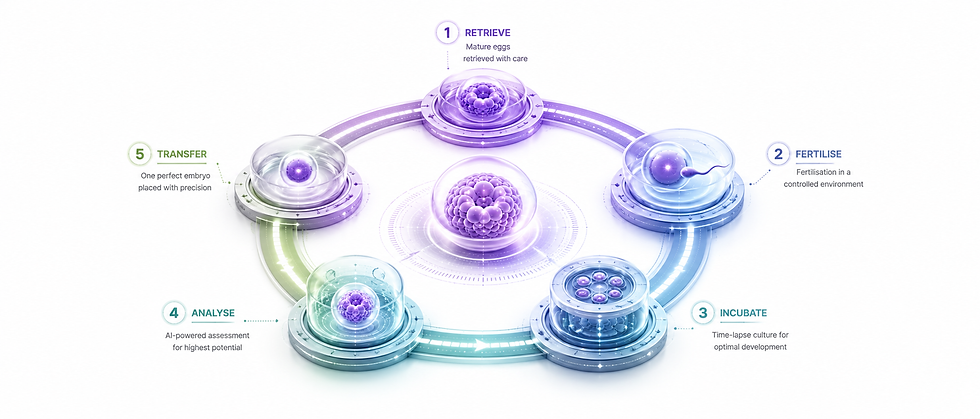
To visualise how modern technology integrates into a seamless treatment pathway, consider the step-by-step patient journey during an eSET cycle:
Step 1: Baseline Evaluation and Ovarian Priming
Detailed hormonal testing (AMH, FSH, LH, Estradiol) and transvaginal ultrasonography establish the ovarian baseline. Personalised stimulation protocols are designed to grow an optimal cohort of healthy follicles.
Step 2: Oocyte Retrieval and Sperm Preparation
When leading follicles reach mature size (18–20 mm), a hCG or agonist trigger shot is administered. Oocytes are retrieved via transvaginal ultrasound-guided aspiration under mild anesthesia. Simultaneously, sperm is processed using density gradient centrifugation or microfluidic sorting to select top-motile spermatozoa.
Step 3: Fertilisation and Time-Lapse Incubation
Fertilisation is achieved via standard insemination or ICSI. Fertilised zygotes are placed inside continuous time-lapse incubators where gas concentrations, temperature, and pH remain perfectly stabilised without removing dishes for inspection.
Step 4: AI Deep Learning Assessment and Embryo Selection
As embryos grow to Day 5/6 blastocysts, deep learning software analyses thousands of images generated during development. The AI calculates an objective viability score, predicting implantation probability and ploidy status.
Step 5: Precision Single Embryo Transfer
Under abdominal ultrasound guidance, a soft catheter gently places the single top-ranked blastocyst into the central uterine cavity. The remaining high-grade blastocysts are vitrified for future use.
Step 6: Luteal Phase Support and Pregnancy Verification
Progesterone support maintains endometrial receptivity. A serum beta-hCG blood test performed 10 to 12 days post-transfer provides definitive confirmation of pregnancy.
10. Conclusion: Embracing the Future of Singleton Success

The evolution of assisted reproductive technology has redefined what it means to achieve success in IVF. Moving away from outdated practices of transferring multiple embryos is not a compromise; it is an upgrade grounded in deep learning analytics, maternal safety, and newborn health.
By prioritising elective single embryo transfer advantages, couples in Kerala can pursue parenthood with confidence. With predictive modeling identifying the single most viable embryo, the vision of a healthy, full-term singleton baby is closer and more attainable than ever before.
Call Now
+91 62 62 62 32 62 (Kottayam )
+91 88 22 55 66 33 (Tirur)
+91 99 47 70 00 06 (Trivandrum & Maldives)