Non-Invasive Genetic Testing Embryo: The Risk-Free Path to IVF Success
Updated: Jul 23

For decades, the journey of In Vitro Fertilisation (IVF) has been a testament to human ingenuity, turning the dream of parenthood into reality for millions of families. Yet, one of the most critical milestones in any IVF cycle remains a delicate balancing act: selecting the healthiest embryo for transfer.
Traditionally, Preimplantation Genetic Testing (PGT) has stood as the gold standard for identifying chromosomal abnormalities (aneuploidies) before implantation. However, this diagnostic powerhouse has historically required a physical micro-biopsy, the extraction of a few cells from the embryo’s outer layer. While highly effective, this mechanical intrusion has always carried a sliver of risk to embryo viability.
Today, a revolutionary paradigm shift is underway in reproductive medicine. The emergence of non-invasive preimplantation genetic testing (niPGT) offers a completely risk-free alternative. By analysing cell-free DNA (cfDNA) naturally shed by the developing embryo into its surrounding culture fluid, scientists can now assess genetic health without ever touching the embryo.
Let's explore how non-invasive genetic testing of embryos is redefining the landscape of modern fertility treatments, helping intended parents achieve higher niPGT-A IVF success rates with absolute peace of mind.
Understanding the Shift: Why Non-Invasive Testing is the Future

To truly appreciate the value of non-invasive embryo screening, we must first understand the mechanics of traditional preimplantation genetic testing.
The Traditional Path: Trophectoderm Biopsy
In standard PGT-A (Preimplantation Genetic Testing for Aneuploidies), embryos are cultured in an embryology lab until they reach the blastocyst stage (usually Day 5 or Day 6 of development). At this stage, the embryo consists of two main parts:
The Inner Cell Mass (ICM), which eventually develops into the baby.
The Trophectoderm (TE), which forms the placenta and outer membranes.
To perform a genetic test, an embryologist must use a high-powered laser to breach the outer protective shell (the zona pellucida) and physically extract approximately 5 to 10 cells from the trophectoderm. These cells are then sent to a specialised genetics lab for testing, while the embryo itself is frozen (cryopreserved) to await the results.
The Hidden Costs of Invasive Biopsies
Although performed by highly skilled embryologists, traditional biopsy is not without potential drawbacks:
Physical Stress on the Embryo: Piercing the embryo and pulling away cells introduces mechanical stress. In a fragile or borderline-quality embryo, this stress can occasionally compromise its survival or ability to thaw successfully.
The Mosaicism Dilemma: Because the biopsy only samples a small portion of the trophectoderm, it may not represent the genetic makeup of the entire embryo. If some cells are abnormal and others are normal (a condition called mosaicism), the biopsy might capture the abnormal cells, leading to the discarding of a perfectly viable embryo that could have self-corrected.
Technological Hurdles: The procedure demands ultra-specialised micromanipulation equipment and extensive training. Not all clinics possess the advanced laboratory setups required to perform safe biopsies, limiting patient access.
The Breakthrough: Cell-Free DNA in Spent Culture Media
Embryos are living, metabolic entities. As they grow, they communicate with their microenvironment. During their development from a single cell to a blastocyst, they naturally release microscopic fragments of DNA into the surrounding droplets of liquid in which they are grown, known as the spent culture medium (SCM) or spent blastocyst medium (SBM).
This genetic material is known as cell-free DNA (cfDNA). Rather than cutting into the embryo to retrieve cells, clinicians can simply harvest the leftover liquid after the embryo is removed for freezing. Analysing this fluid allows embryologists to screen for chromosomal health with zero physical contact with the embryo itself, rendering the process 100% risk-free.
How Non-Invasive Genetic Testing of Embryos Works: A Behind-the-Scenes Look
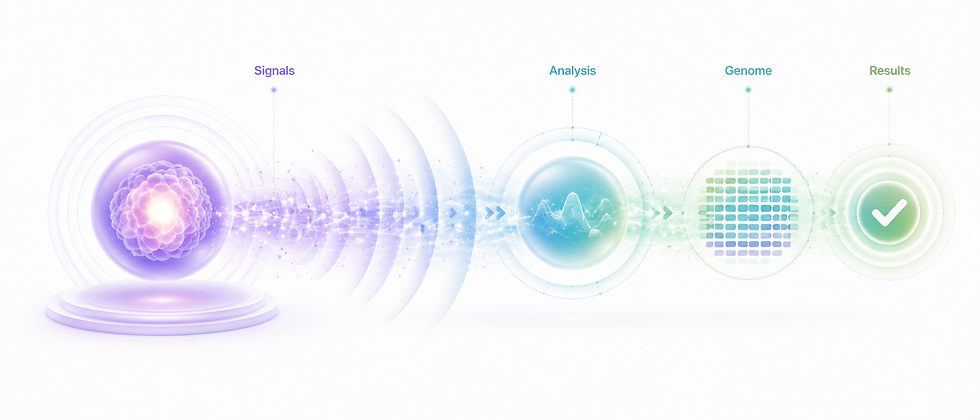
The process of niPGT is an elegant blend of biology, biochemistry, and cutting-edge computational power. Because the amount of cell-free DNA left behind in a tiny droplet of culture media is microscopic (often measured in picograms), the laboratory protocols must be incredibly precise.
Step 1: Culturing Under Ultra-Clean Conditions
To prevent contamination, the IVF laboratory must maintain strict protocols. Because human skin cells and airborne particles also contain DNA, embryologists use clinical grade, ultra-pure reagents and specialized dishes. The embryos are cultured individually in micro-droplets of media, allowing the cfDNA of each unique embryo to accumulate in its respective droplet.
Step 2: Harvesting the Spent Culture Medium
On Day 5 or Day 6, once the embryo reaches the blastocyst stage and is ready for cryopreservation, it is gently moved to a different dish for freezing. The tiny droplet of liquid left behind, containing the embryo's shed DNA, is carefully aspirated using a microscopic pipette.
Step 3: Whole Genome Amplification (WGA)
Because the collected sample contains only trace amounts of DNA, scientists use a process called Whole Genome Amplification (WGA) to make millions of copies of the genetic fragments. This ensures there is a sufficient quantity of material for accurate sequencing.
Step 4: Next-Generation Sequencing (NGS)
Using high-throughput Next-Generation Sequencing (NGS), the amplified DNA is analysed. Advanced algorithms compare the relative amounts of DNA from each of the 23 pairs of chromosomes. This determines whether the embryo is euploid (having the correct number of chromosomes, such as 46) or aneuploid (having missing or extra chromosomes, such as in Down syndrome or Edwards syndrome).
Deciphering the Biology: Where Does Embryonic cfDNA Come From?
Understanding why cell-free DNA is a reliable indicator of embryo health requires looking closely at early cellular development.
During the rapid cell divisions of the first five days of life, some cells naturally undergo a process called apoptosis (programmed cell death). This is a normal quality-control mechanism where the embryo eliminates cells that contain replication errors or damaged organelles. When these cells break down, their DNA is released into the blastocyst cavity (blastocoel fluid) and eventually diffuses outward through the outer shell into the surrounding culture media.
Crucially, because apoptosis often targets abnormal cells, some scientists hypothesise that cfDNA might actually provide a more holistic picture of the embryo’s overall health than a single, localised trophectoderm biopsy, which only samples one tiny patch of cells.
The Clinical Benefits: Why niPGT-A IVF Success is Changing the Game
By eliminating the invasive nature of embryo screening, niPGT offers a multitude of clinical and practical advantages that directly translate to higher confidence and better outcomes for patients undergoing IVF treatment in Kerala.
1. 100% Protection of Embryo Integrity
The most obvious benefit of non-invasive testing is safety. Because the embryo itself is never touched, cut, or exposed to lasers, there is absolutely zero risk of physical damage. This makes genetic screening accessible even for patients with lower-grade embryos or those who produce very few blastocysts, where a traditional biopsy would be deemed too risky.
2. Elimination of Embryologist Subjectivity
Manual biopsies require an exceptionally high level of manual dexterity and are subject to human variation. In contrast, collecting spent culture media is a highly standardised, straightforward pipetting process. This minimises laboratory-to-laboratory variation, ensuring consistent and reproducible results.
3. A Potentially More Accurate Representation of the Embryo
A single trophectoderm biopsy can sometimes yield a false positive or false negative due to chromosomal mosaicism, a mix of normal and abnormal cells in the same embryo. Since cell-free DNA is shed from cells across the entire embryo (including both the inner cell mass and the trophectoderm), it may provide a more comprehensive, representative profile of the embryo's true chromosomal status.
4. Reduced Laboratory Complexity & Cost
Because niPGT bypasses the need for expensive micromanipulators and laser systems, it simplifies the laboratory workflow. This efficiency can help make advanced genetic screening more affordable and accessible, allowing affordable IVF clinics in Kerala to offer high-tech screening to a broader range of patients.
Comparing the Options: Traditional Biopsy vs. Non-Invasive PGT
For patients trying to decide on the best course of action during their fertility journey, comparing the features of these two approaches can provide valuable clarity:
Invasiveness: Traditional PGT-A is highly invasive, requiring a laser-assisted micro-biopsy. Non-invasive PGT (niPGT) is entirely non-invasive, relying solely on leftover culture fluid.
Risk of Embryo Damage: Traditional biopsy carries a minimal but real risk of mechanical damage, particularly in fragile embryos. Non-invasive PGT carries absolutely 0% risk of physical damage.
Turnaround Time: Both methods typically require 1 to 2 weeks for genetic sequencing, meaning embryos are frozen while awaiting results.
Concordance Rates: Traditional PGT-A is highly accurate for the specific site biopsied. Non-invasive PGT shows high concordance rates (typically 75% to 95%) with the embryo’s true chromosomal state, though it can occasionally be influenced by trace amounts of maternal DNA from surrounding cells.
Patient Accessibility: Traditional testing is restricted to highly specialised, high-cost facilities. Non-invasive testing is more easily integrated, helping clinics offer advanced infertility care more widely.
What Does the Science Say? Clinical Efficacy and Success Rates
As with any major medical breakthrough, the transition of niPGT from research laboratories to active clinical use has been supported by rigorous scientific studies.
A pivotal clinical trial published in Human Reproduction examined the predictive accuracy of non-invasive preimplantation genetic testing for aneuploidies. The study demonstrated that when using optimised culture protocols, the DNA profile obtained from the spent culture media showed a remarkably high concordance rate of over 85% with the results obtained from traditional trophectoderm biopsies and whole-embryo analyses.
Furthermore, research indicates that selecting embryos based on niPGT-A results leads to clinical pregnancy rates and ongoing pregnancy rates that are fully comparable to those achieved via traditional, invasive biopsy methods, all while completely avoiding the physical risks of micromanipulation.
You can read more about the scientific validation and clinical benchmarks of this technology in this detailed study on Non-Invasive Preimplantation Genetic Testing published in MDPI.
Who Should Consider Non-Invasive Genetic Testing?
While any patient undergoing IVF can benefit from the risk-free nature of niPGT, it is particularly recommended for specific clinical situations:
1. Advanced Maternal Age (35 and Older)
As women age, the quality of their eggs naturally declines, leading to a higher rate of chromosomal abnormalities in the resulting embryos. Screening embryos with niPGT helps identify the chromosomally normal (euploid) embryos, significantly reducing the time to pregnancy and lowering the risk of miscarriage.
2. Couples with Recurrent Pregnancy Loss (RPL)
Repeated miscarriages are frequently caused by chromosomal imbalances in the embryo. By ensuring that only genetically balanced embryos are selected for transfer, niPGT-A can dramatically lower miscarriage rates and offer hope to couples who have experienced the heartbreak of recurrent loss.
3. Patients with Low Embryo Yields
For patients who produce only one or two blastocysts per IVF cycle, the thought of performing a physical biopsy on their precious, limited embryos can be incredibly anxiety-inducing. Non-invasive testing allows these patients to benefit from genetic screening without risking the physical integrity of their only embryos.
4. Couples Experiencing Unexplained IVF Failure
When visually perfect embryos fail to implant across multiple transfer cycles, underlying chromosomal issues are often to blame. Screening via niPGT-A helps rule out these hidden genetic anomalies, helping clinicians optimise transfer strategies.
Choosing Advanced Infertility Care in Kerala
Embarking on a fertility journey is a deeply personal and emotional experience. Achieving your dream of parenthood requires not only cutting-edge technology but also compassionate, individualised care.
At Bliss Fertility, recognised as the Best IVF Clinic in Kerala, we are committed to bringing the global gold standard of reproductive medicine to your doorstep. Our state-of-the-art embryology laboratories are equipped with the ultra-precise environment-control systems necessary to perform advanced non-invasive embryo assessments.
Whether you are seeking specialised Female Infertility Treatments, exploring advanced diagnostic procedures, or looking for the most reliable path to niPGT-A IVF success, our team of experienced reproductive specialists is here to guide you every step of the way.
We believe that world-class care should be accessible. As one of the most trusted and affordable IVF clinics in Kerala, we design customised treatment paths tailored to your unique biological and financial needs, ensuring you receive the highest quality of care without compromise.
Visit Our Multi-Branch Network Across Kerala
To make your journey as seamless as possible, Bliss Fertility offers convenient, state-of-the-art diagnostic and treatment centers in key locations across the state. Explore our localized services and connect with our expert teams:
Trivandrum Center: Providing comprehensive IVF, ICSI, and advanced genetic screening services in the capital city. Learn more at Bliss Fertility Trivandrum.
Tirur Center: Delivering world-class fertility care and advanced diagnostics to patients in and around Malappuram. Learn more at Bliss Fertility Tirur.
Kottayam Center: Offering customised fertility solutions, advanced lab technologies, and compassionate care. Learn more at Bliss Fertility Kottayam.
The Road Ahead: Embracing a Safer Tomorrow in IVF

The transition from invasive physical biopsies to non-invasive genetic screening represents one of the most exciting leaps forward in the history of assisted reproductive technology (ART). By removing the physical risks associated with embryo testing, niPGT aligns perfectly with the core tenet of modern medicine: First, do no harm.
As research continues to refine the sensitivity of cell-free DNA amplification and artificial intelligence tools are integrated to analyse embryonic secretions, the accuracy and utility of non-invasive screening will only grow. For intended parents, this means a safer, more reassuring path to holding a healthy baby in their arms.
If you are planning your IVF journey or want to learn more about how non-invasive embryo testing can improve your chances of success, reach out to our team today. Let’s take the next step toward your family's future, together.
Call Now
+91 62 62 62 32 62 (Kottayam )
+91 88 22 55 66 33 (Tirur)
+91 99 47 70 00 06 (Trivandrum & Maldives)